
Kolkata
Haunted places in Kolkata: the legends, and what the record shows
Five Kolkata places with stories attached: a radio station, a cemetery, a secretariat and a burning ghat with ghost stories, and a library with a sealed room. What each legend says, and what the record actually shows.
In this post (6)
Every city keeps its ghosts in its oldest buildings, and Kolkata has no shortage of old buildings. A graveyard laid out in 1767. A block of clerks' offices from 1777. A viceroy's house turned library. A cremation ghat on the river. A radio station that is not there any more. Each has its story: a sahib who never left, soldiers among the tombs, the dead in a clerks' corridor.
Nobody has shown that any of these stories is true. What is true, and more interesting, is why these places in particular collected them. So come round them one at a time: at each, the legend as it is told, and then the record.
1 Garstin Place: the sahib who stayed on
The story first, because it is the one Kolkata tells best. Garstin Place was where Calcutta's radio station opened in 1927, and the house had a name for being haunted. The ghost, as the story is told and as a Sunday Suspense title has it, was a sahib: an Englishman who stayed on after the broadcasters went home. He lives in the stories alone; no written account of him older than the stories has turned up.
The record is plainer. Bengali Wikipedia's page on Akashvani Kolkata says the station opened at 1 Garstin Place on 26 August 1927, the second oldest radio station in India, and moved to the present Akashvani building near Eden Gardens later; the page dates the move to 1958; another account gives 1961, and our Mahalaya post gives both. The building is gone. The ghost story is what was left.
There is a reason this one matters to Bengal more than the others. The station at Garstin Place is where Mahishasura Mardini was first performed live, before dawn, with Birendra Krishna Bhadra at the microphone. Mirchi Bangla's Sunday Suspense Classics puts his name on a short ghost story about the place.
 8:30Play: Garstin Place-er Saheb Bhoot
Garstin Place-er Saheb Bhoot
Mirchi Bangla
The sahib's ghost of Garstin Place, from Sunday Suspense Classics, with Birendra Krishna Bhadra's name in the title. Eight and a half minutes, so play it last, with the lights off.
South Park Street Cemetery
Wikipedia's list of reportedly haunted places in India has it in a single line: British soldiers lie buried here, and they are said to haunt it. That is the whole legend, and it asks for nothing more than a walk among the tombs on a winter afternoon.
The record, from the cemetery's own Wikipedia page, is better than any ghost. The burial ground opened in 1767 with a new road to reach it, Burial Ground Road, which became Park Street. Henry Louis Vivian Derozio, the young teacher of the Young Bengal movement, is buried here, and so is Sir William Jones, who founded the Asiatic Society. There is grave number 363, an unknown woman who died in 1825, whose stone says only: a virtuous mother. In 1984 part of the ground was nearly cleared for an arts centre; the Calcutta High Court stopped it, but many graves were already lost.
Walk there and it is the unknown woman you remember. Two hundred years, and one line of praise. If anyone is still waiting in that garden, it is not a soldier.
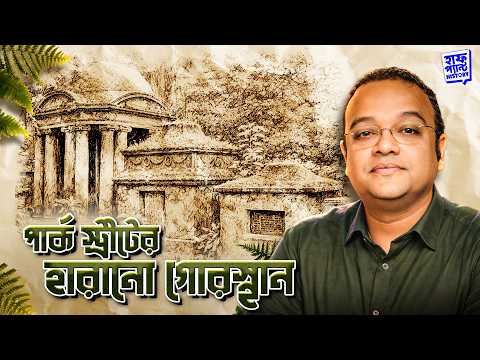 9:07Play: Park Street-er Harano Gorosthan
Park Street-er Harano Gorosthan
Half Pant History
Half Pant History on the lost cemeteries of Calcutta, and how Park Street got its old name. Nine minutes.
South Park Street Cemetery
Park Street (Mother Teresa Sarani), central Kolkata
One of the oldest Park Street burial grounds, opened in 1767, with Derozio and Sir William Jones among its graves. A garden of obelisks and mausoleums, quiet at the heart of a loud street.
- Opened
- 1767
- Nearest metro
- Park Street, Blue Line
The National Library and its room with no door
Here the record did the storytelling. The library sits in the Belvedere Estate at Alipore, where British viceroys once lived, and it has been there since 1953. In 2010, Wikipedia records, engineers from the Archaeological Survey of India, restoring the building for the Ministry of Culture, found a room nobody knew about: about 1,000 square feet on the ground floor, with no opening of any kind. They searched the floor above for a trap door and found none.
You can imagine what the city made of that. A punishment room of Warren Hastings's, said some; treasure, said others. In 2011 the answer came, and it was the least ghostly answer possible: the room was full of earth, probably packed in to steady the building. We like this story more than any haunting. For months Kolkata had a sealed room and no idea what was in it, which is exactly how every ghost story starts.
 12:30Play: How National Library Was Born
How National Library Was Born
Half Pant History
Half Pant History on how the Calcutta Public Library of 1836 became the Imperial Library and then the National Library. Twelve and a half minutes.
Writers' Building
The legend is vague on purpose: Wikipedia's list says only that various stories claim the building near B.B.D. Bagh is haunted by the dead. It is the kind of story every old office has, told by the last person to leave at night.
The record: Thomas Lyon designed Writers' Building in 1777 to house the East India Company's writers, its junior clerks, on land where the old Fort William had stood until 1756. Over the next century it grew into the seat of British government in Bengal, and from 1947 to 2013 it housed the West Bengal government. In 2026 a new state government said it would move back. A building that has held that much paper and that much power is bound to have a few stories left in its corridors.
Nimtala ghat
Wikipedia's list says only that the ghat is said to be haunted. It is a cremation ground on the river, and Bengal has told stories about cremation grounds for as long as it has told stories at all. That is not the part to dwell on.
The record is the part to keep. Nimtala's first building went up in 1717, and Babu Rajchandra Das built the present structure in 1817. Rabindranath Tagore was cremated here in 1941; so were Rani Rashmoni and Ishwar Chandra Vidyasagar. There is a Tagore memorial in the compound. People go there to grieve, and a place of grief is owed quiet, not a ghost hunt.
Why these places
Look at the list again and a pattern shows. Every place Kolkata has attached a ghost to is a place of the city's beginnings: an early graveyard, the Company's clerks' offices, the radio station of 1927, a ghat of 1717. Where the stories name a ghost, it is a sahib. Perhaps that is what a haunting is, in a city like this one: the old town that built the buildings, still walking through them, in the stories of the town that came after.
If you want the ghosts themselves, they are on our ghost stories shelf, and on Bhoot Chaturdashi, Saturday 7 November, Bengal lights fourteen lamps for its own. For the history, the history shelf has more Half Pant History.
The photograph at the top is on Wikimedia Commons under a CC BY-SA 4.0 licence, and our crop of it is shared on the same terms.
References (6)
- List of reportedly haunted locations in India, Wikipedia. Checked 30 Sep 2026.
- South Park Street Cemetery, Wikipedia. Checked 30 Sep 2026.
- National Library of India, Wikipedia. Checked 30 Sep 2026.
- Writers' Building, Wikipedia. Checked 30 Sep 2026.
- Nimtala Crematorium, Wikipedia. Checked 30 Sep 2026.
- আকাশবাণী কলকাতা, Bengali Wikipedia. Checked 30 Sep 2026.
Pictures: South Park Street Cemetery, opened in 1767, on a March morning in 2011: Priyankardey, Wikimedia Commons, CC BY-SA 4.0, cropped
Just inNew stories from the channelsWhat the Bengali story channels have just put up, played from their own YouTube.See the stories


Follow MoodKolkata
More posts like this, new stories and songs, as they come.