
Festivals
Kojagari Lakshmi Puja 2026: the date, the night and how Bengal keeps it
Kojagari Lakshmi Puja falls on the night of Sunday 25 October 2026 in Kolkata. Here is why that night, what the name means, and what a Bengali home lays out for the goddess.
In this post (5)
Kojagari Lakshmi Puja falls on the night of Sunday 25 October 2026. The Pujo is four days gone by then. The dhak has stopped, and the goddess who left on Dashami has left her daughter behind: in Bengali Hindu belief, as English Wikipedia's article on Lakshmi notes, Lakshmi is one of Durga's children. For a few days after the immersion the city feels a little empty, and on the full moon in that empty stretch the daughter is worshipped not in a pandal but on the floor of the house. Durga came as the city's guest, among crowds and drums. Lakshmi is taken in by the household, and the household stays up for her.
When is Kojagari Lakshmi Puja in 2026?
Kojagari Lakshmi Puja 2026 is on Sunday 25 October in Kolkata. Drik Panchang's Kolkata calendar has the full-moon tithi of Ashwin running from 11.55 am on Sunday 25 October to 9.41 am on Monday 26 October. The moon rises at 4.21 pm on Sunday, and the Nishita, or midnight, puja time is 10.56 to 11.46 pm that night.
Why Sunday and not Monday, when the tithi touches both? Because the puja belongs to the evening. Bengali Wikipedia says the proper time is prodosh, the two hours after sunset, and that when the tithi holds at prodosh on the first day but not the next, the puja is done on the first. This year the tithi is gone by Monday morning, so Sunday evening is the only prodosh that has it. If your family's almanac or priest reads the day as the 26th, their word is the one that counts.
Kojagari Nishita puja begins (10.56 pm, Kolkata)
- KolkataSun22:5625 Oct
- DhakaSun23:2625 Oct
- LondonSun17:2625 Oct
- New YorkSun13:2625 Oct
- BengaluruSun22:5625 Oct
The midnight puja window Drik Panchang gives for Kolkata, Sunday 25 October 2026. Bengali Wikipedia gives the hours just after sunset as the proper time for the puja; this later window is for those who keep the vigil.
Kojagari: who is awake?
The name is a question. Kojagari comes from ko jagarti, "who is awake?", and the belief behind it is that Lakshmi walks from house to house on this full-moon night and gives her blessing where she finds someone awake. The vigil itself is in Drik Panchang and in English Wikipedia. Bengali Wikipedia goes a step further, with a Sanskrit verse in which the goddess, wandering at midnight, promises wealth to whoever is awake and playing at dice. The same page records a custom that will startle anyone raised in a well-behaved house. Some people steal fruit from someone else's garden that night, in the belief that it pleases her.
We like the question more than the answer. Those who have nothing, the saying goes in the same article, stay up hoping to get something; those who have something stay up afraid to lose it. It is the most honest description of household money we know.
How a Bengali home keeps Kojagari
It starts on the floor, with fingers dipped in wet rice paste. On this night, Bengali Wikipedia says, the white alpana (floor drawing) carries sheaves of paddy, coins and the goddess's footprints, and drawn into the house, English Wikipedia's alpana article says, such designs show that Lakshmi has come in. The footprints are a motif of Bengal's alpana in general, as its article on alpana says. On Kojagari they walk in through the door.
What she sits in depends on where your family came from. Bengali Wikipedia lists a whole shelf of forms. A clay idol from a mould. A painted clay plate, the sara, in the East Bengal way, with its own styles named for Dhaka, Faridpur, Sureswar and Shantipur, and still painted at Taherpur and Nabadwip in Nadia and in North 24 Parganas. A basket of paddy dressed in red cloth, the ari lakshmi. Nine rolls of banana bark filled with grain, the kolar bher. A terracotta pot with her face on it. And the saptatori, little boats cut from banana stem and loaded with rice, lentils, cowries and turmeric: trading boats, for a goddess of trade.
Bengali Wikipedia says as much: the objects of the puja point to the farming society behind it. Look again at the shelf of forms and the point sharpens, because a basket of paddy, banana bark filled with grain and boats loaded with rice and lentils are all larders. Even the owl that carries her, the same page says, is there for a farmer's reason. Paddy is Lakshmi, rats eat paddy, and owls eat rats.
Nor is her puja a once-a-year affair. The same page records the Lakshmir panchali (a verse prayer-story) read at home every Thursday, and Lakshmi worshipped again at the harvest turns of the year, on the sankranti, the last day, of Bhadra, Poush and Chaitra. The goddess in the pandal comes once a year and leaves after a few days. The Bengali household keeps Lakshmi all year, in the Thursday reading, at the harvest, in the basket of paddy, and on Kojagari it sits up for her, the way anyone with something to lose stays awake.
What goes on the plate
The bhog (the food offered to the goddess) is where the two Bengal kitchens part company. In Bengali Wikipedia's account many homes offer a pair of hilsa, and East Bengal (Bangal) families cook five fish dishes, while West Bengal (Ghoti) families keep the day vegetarian and cook no rice at all. Khichuri and labra (mixed vegetables) are a must, it adds, and so is what no house argues about: narkel naru (coconut sweets), til naru (sesame sweets), luchi and payesh (rice pudding). The photograph at the top of this page, from a family puja in Howrah in 2017, shows the offerings laid out: the luchi, the naru and the fruit, waiting for the puja. Our Durga Puja bhog guide has the Pujo week's version of the same plate.
- Draw the alpana before the puja, with the footprints walking into the house.
- The puja belongs to the evening this year: after sunset on Sunday 25 October.
- Keeping the vigil? The Nishita window is 10.56 to 11.46 pm. The moon will have been up since 4.21 pm.
- Far from home: the world clock above has your city's time for the Nishita puja.
For a night you are meant to stay awake
The stories below fit the hours after the puja, and the songs are for the moon. The first two are one Tagore song, and it could have been written for tonight, though it is a spring song. Everyone has gone to the woods in the moonlight, the singer says; I will not go. I have to wash this house and wipe it with care, ‘আমারে যে জাগতে হবে, কী জানি সে আসবে কবে’: I have to stay awake, who knows when he will come. Clean the house, keep awake, wait for the one who may come in the night. That is Kojagari in three lines.
 4:03
Aaj Jyotsna Raate
SVF Music
Credited to Madhubanti and Amlaan, for the series Six, SVF Music, 2018. Four minutes.
 4:22
Aaj Jyotsna Raate
Asha Audio
The same song, sung by Koushik Chakraborty and Prajna for Asha Audio, 2026.
 3:00
Purnima Sondhay
Zee Music Bangla
Lagnajita Chakraborty, in Zee Music Bangla's 2024 release from Sedin Kuyasha Chilo. Three minutes, for a full-moon evening.
 17:06Play: Kali Katha: Kojagorir Ajana Tathya
Kali Katha: Kojagorir Ajana Tathya
Mirchi Bangla
Mirchi Bangla's Times of Puraan, episode 16: seventeen minutes of little-known things about Kojagari, as the title promises. The two episodes after it stay with Lakshmi.
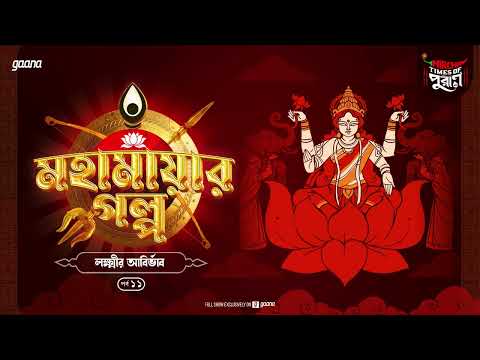 48:03Play: Mahamayar Golpo: Lakshmir Abirbhab
Mahamayar Golpo: Lakshmir Abirbhab
Mirchi Bangla
Lakshmi's appearance, her abirbhab, told over about forty-eight minutes by Times of Puraan on Mirchi Bangla. English Wikipedia notes the belief that she rose from the churning of the ocean on this very full moon.
 45:34Play: Baikunther Lakshmilabh
Baikunther Lakshmilabh
Akashvani Kolkata
For after the prasad: a comedy from Akashvani Kolkata, forty-five minutes. The title promises a man called Baikuntha a windfall of Lakshmi; we will leave the rest to the story.
When the stories end, the Pujo mood still has the season's songs, and the Rabindra Sangeet mood has more moonlight. And if you were away for the Pujo itself and missed the songs, our Durga Puja songs guide is waiting.
References (7)
- Kojagara Puja 2026, Kolkata, Drik Panchang. Checked 29 Sep 2026.
- Sharada Purnima, Wikipedia. Checked 30 Sep 2026.
- কোজাগরী লক্ষ্মীপূজা (Kojagari Lakshmi Puja), Bengali Wikipedia. Checked 30 Sep 2026.
- Lakshmi, Wikipedia. Checked 30 Sep 2026.
- আলপনা (Alpana), Bengali Wikipedia. Checked 30 Sep 2026.
- Alpana, Wikipedia. Checked 30 Sep 2026.
- Aaj jyotsnarate sabai gechhe bone (Gitabitan, Puja 146), Bengali Wikisource. Checked 30 Sep 2026.
Pictures: Kojagari Lakshmi Puja at a family home in Howrah, 5 October 2017, laid out for the puja.: Biswarup Ganguly, Wikimedia Commons, CC BY 3.0, cropped
Just inNew stories from the channelsWhat the Bengali story channels have just put up, played from their own YouTube.See the stories


Follow MoodKolkata
More posts like this, new stories and songs, as they come.